

Against Indifference
On mutual aid, exhaustion, and fighting to keep one another here.

I have to be honest, I’ve been struggling lately in the way I imagine many of you have been struggling, which is to say I have been waking each morning into the unbearable mathematics of human suffering. Too many bodies beneath too much rubble. Too many people pushing their lives in shopping carts through cities that no longer know how to look them in the eye. Too many prayers sitting unanswered in hospital rooms and shelters and eviction courts and subway stations at three in the morning. Some days it feels like the whole world is asking the human spirit to bench press grief until its arms give out.
But I’m going to come back to that in a second because there is an update I need to provide first.
*****
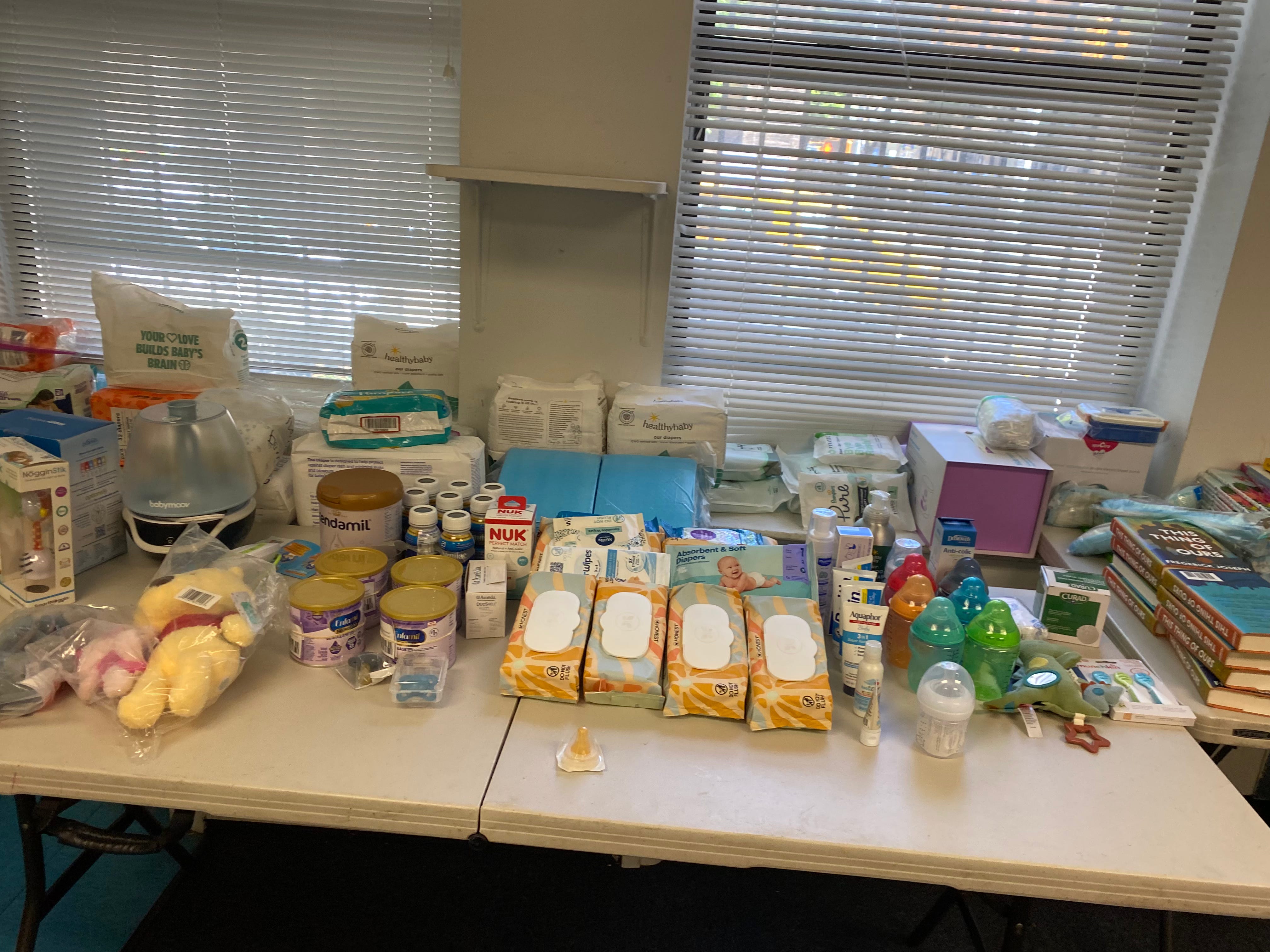
For the eighth year in a row, we organized our Women’s History Month mutual aid effort to support women living in shelters, and before anything else I want to thank everyone who donated, shared the fundraiser, or simply allowed themselves to care in a time that increasingly punishes people for feeling too much. Together, we raised over $13,000. Below are photos of some of the hygiene products, food, clothing, and other essentials purchased and distributed through this effort.
I apologize for taking so long to share this update. The truth is that when the fundraiser ended, I found myself sitting with a sadness I could not immediately explain.
Not because people failed to show up. People did show up. Generously. Tenderly. But because we did not reach our goal of $20,000, and because after the money was distributed it vanished almost instantly into the ordinary costs of survival. Hygiene products. Baby formula. Boots. Food. I remember looking at our bank account afterward and thinking about how frightening it is that in America the feeling of being human can disappear over something as small as shampoo. How quickly a life can begin unraveling because somebody cannot afford to remain clean, remain fed, remain housed, remain safe.
I think what saddened me was not simply that the need was large. I have known the need was large for years. I’ve understood this sort of need since I was a boy watching my mother boil water on the stove so I could have a warm bath. I think what saddened me was realizing how quickly suffering absorbs generosity in this country.
You gather thousands of dollars and within days it is gone because the wound itself is so enormous.
And lately the wound seems to be everywhere.
You open your phone and watch children carried from collapsed buildings overseas while commentators debate whether their deaths are politically inconvenient. You walk through New York City and pass men sleeping beneath scaffolding while luxury towers rise above them like monuments erected to the worship of indifference. You see a woman on the subway carrying everything she owns in garbage bags, stopping every few minutes to readjust the weight of them on her shoulder as though personhood itself has become something physically heavy to carry in this country. You stand in line at a pharmacy and overhear someone quietly asking which prescription they can afford to leave behind.
And after a while, if you are not careful, the sheer volume of suffering begins to alter your relationship to feeling itself.
I think many people are living with this now. Not hopelessness exactly. Something perhaps more dangerous. A slow emotional starvation. We are witnessing so much catastrophe at once that people are beginning to lose faith in the usefulness of tenderness. Climate collapse. Fascism. Loneliness. War. Poverty. Economic terror. Spiritual exhaustion. Human suffering arrives now in such relentless quantities that many people have unconsciously started training themselves not to feel too deeply because to feel everything would shatter them.
There are days lately when I can feel this happening inside myself.
There are days when I walk home through this city and feel something in me trying to retreat from the world emotionally because remaining open to this much pain begins to feel unbearable after a while. I think that is the part people rarely confess publicly.
Caring hurts. Paying attention hurts.
Which is why I understand exactly why people choose numbness. Numbness can feel like survival. But I also think numbness is what these systems are counting on.
Cruel societies do not survive merely because of wealth or violence. They survive because ordinary people eventually begin believing another person’s suffering is not their concern. They survive because exhaustion convinces people that empathy is naïve. They survive because human beings become so overwhelmed by the scale of pain surrounding them that they stop believing small acts of care matter at all.
And yet if you look honestly at how most people survive difficult periods in their lives, it is almost never institutions that save them first.
It is another person.
Someone pays for groceries, someone sends money for medication, someone offers a couch, someone calls at the right moment, someone sends a few dollars at the very moment someone else was praying someone would help.
I think often now about what this era is doing to the human spirit. We are living in a culture that rewards detachment because detachment is profitable. Everything encourages us not to look too closely. Not to feel too deeply. Not to become too burdened by the suffering of strangers. Human beings are increasingly taught to experience tragedy as spectators instead of participants in one another’s lives. And once suffering becomes ordinary enough, once abandonment begins feeling natural enough, almost any cruelty becomes possible.
That frightens me more than the cruelty itself sometimes.
Because I think the greatest crisis facing this country is no longer merely political. I think it is a crisis of feeling. A crisis of imagination. A crisis of responsibility. We are losing the ability to believe we belong to one another.
And maybe that is why this work continues to matter to me.
I don’t believe mutual aid alone can save the world. It cannot. These fundraisers will not end homelessness or violence or poverty. But I do believe there is something sacred in refusing to surrender entirely to indifference. I believe there is something radical in deciding another person’s suffering is your concern even when the world insists it should not be. I believe there is something profoundly human in trying to lessen the burden another person carries through this life, even slightly.
Maybe that is what I have been trying to build all these years through my books, my speaking engagements, my social media posts, all of it. Not a brand. Not an audience. A reminder. A reminder that people do not survive alone. A reminder that consciousness without tenderness eventually curdles into performance. A reminder that love is not merely a feeling but a form of labor. A form of protection. Sometimes even a form of resistance.
And maybe that reminder is more to me than any of you reading this.
Because when it’s all said and done, I think the question is ultimately what kind of people we will allow suffering to turn us into.
Anyway, thank you all for continuing to show up in the ways that you do. For sharing. For donating. For reading the books. For allowing me space inside your attention spans during a time where everyone is overwhelmed and exhausted and fighting to hold onto their humanity. I do not take lightly the fact that so many of you continue walking beside me through these questions, these efforts, and these attempts to make something gentler out of a world that often feels committed to the opposite.
In the coming weeks, we will begin fundraising again for our annual Juneteenth mutual aid effort (feel free to get a jump on that if you like) supporting one hundred unhoused people throughout New York City, as we have done for the past several years. And I hope some of you will continue walking with us in this work. I’ll also be writing more short stories and cultural and political essays with greater frequency, as I did in the past, now that some of my bandwidth has opened up. Be on the lookout for those.
Photos from our donation this year:


If my work has ever moved you, taught you, or made you feel seen, please consider preordering my novel Everything’s Not Lost or becoming a paid subscriber. I keep my writing free because I believe in access, but sustaining that vision takes support. Your contribution helps me keep creating with care and honesty.
There were times I was homeless, hungry, and didn’t have a penny to my name. Over 30 years later, I still remember the names, faces, organizations that gave me a bag of groceries, a gas card, or helped me pay my rent. They didn’t just leave their mark on me because they helped me, they left their mark on me because I felt seen instead of invisible. I felt worthy instead of worthless. Mostly? People believed in my humanity. What an amazing gift.
Thank you for helping the (often) invisible, Fred. It matters.
Frederick, I feel you, brother and I concur with every word you wrote, every feeling you expressed. Daily, I struggle to keep from blinking as I bear witness to the dimensions and layers of suffering, of sheer cruelty and wanton desecration. In Clonakilty, Ireland I saw a brass plaque that read:In Memory of Those Who died Homeless in our Vulture Republic.” It’s everywhere. And I keep reading your writing, contributing to your fundraisers, helping folks I know, and showing up in the ways I can, mostly, twice a week at the county jail to run listening circles—because the moment we stop, we surrender our humanity. No, we won’t end the wars and the hegemony and the empire with our small acts. We will simply and meaningfully assure each other that we still matter to each other because we ARE each other.