

Harvested Lives
How work, time, and exhaustion are shaping what it means to be human.

Time is the rarest gift we are given, and the only one we are trained not to notice as it disappears. We speak of it casually, as if it belongs to us, as if it can be managed, saved, made more efficient, as if it is not, in fact, the substance of our lives. But time does not bend to intention. It yields to structure.
And if I am honest about the structure of my own life, the truth is both simple and unbearable.
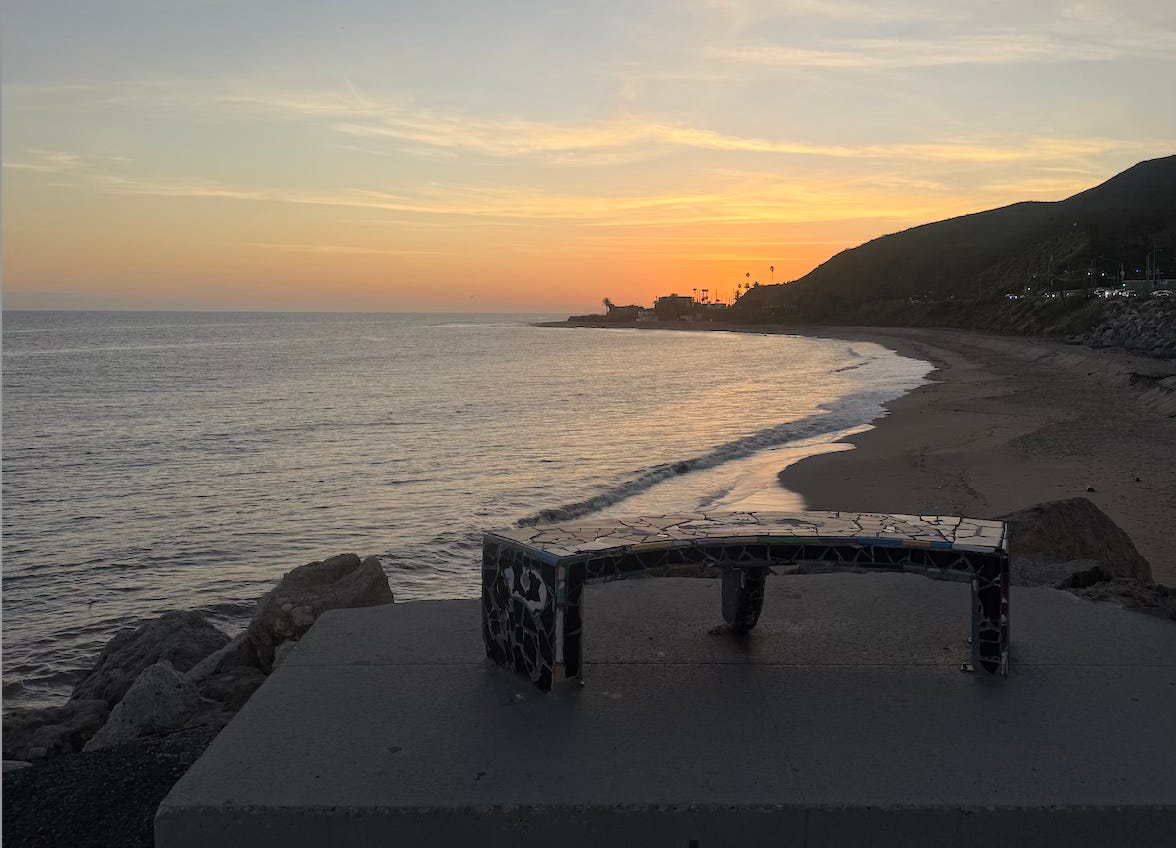
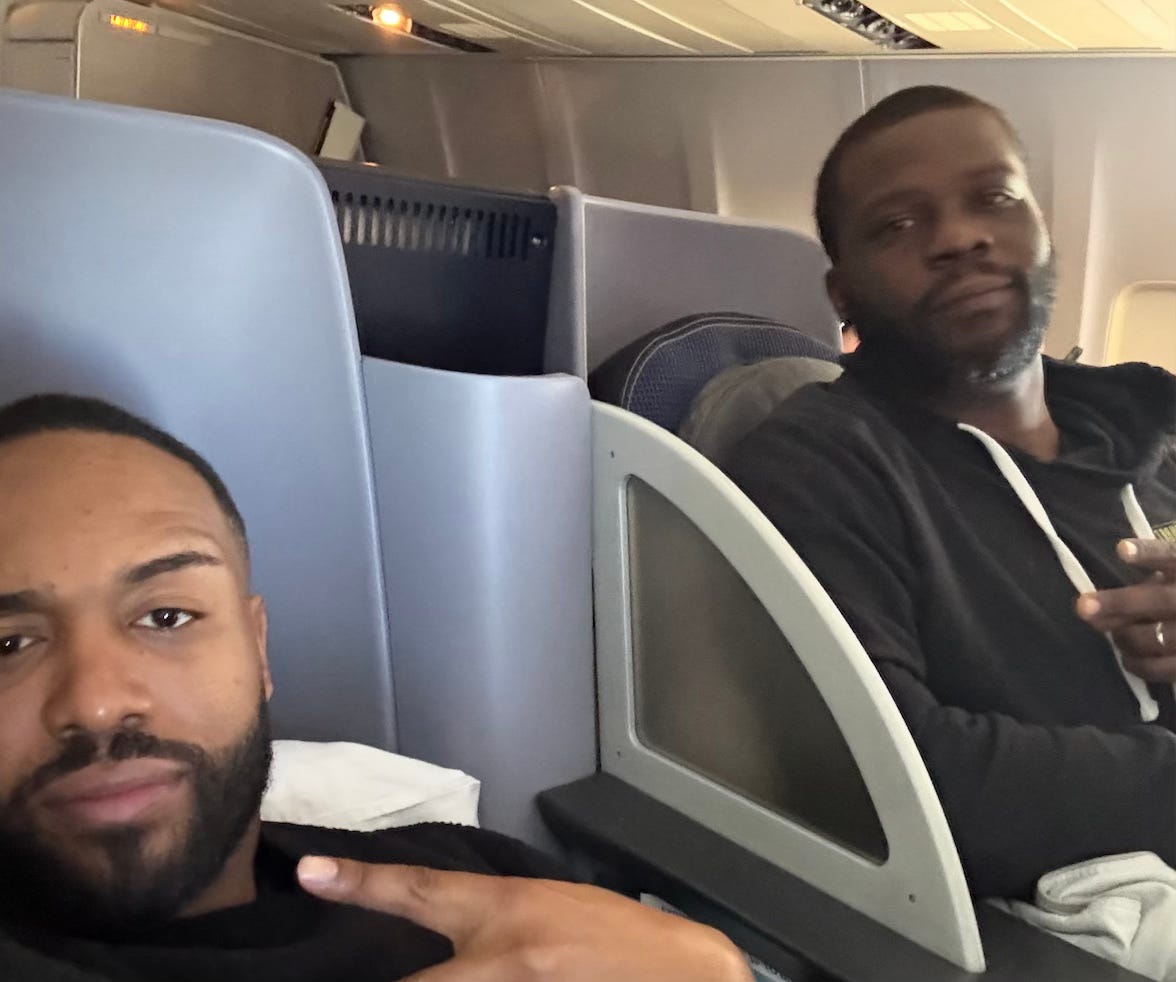
I was thinking about time recently while on a trip to Los Angeles with my godbrother. He lives in Texas. I live in New York City. Somewhere along the way, we learned to call that distance normal. We learned to call absence adulthood. We have both been living the lives we were told to build, working, moving, accomplishing, always in motion and rarely in the same place.
He was sitting across from me, close enough that I could see what time had changed since the last time I had been this near. Not in any grand way, not in the kind of change that announces itself, but in the faint places. Along his chin, where the hair had begun to gray in small, deliberate patches. At his temples, where the dark had given way, not all at once, but steadily, as if time had been returning to claim something it had left behind. I noticed it before I meant to. The way you notice something you cannot unknow. And once I saw it, I could not stop seeing it.
It unsettled me, not because of what it said about him, but because of what it said about us. About how long it had been since I had really looked at him. Not through a screen, not in passing, not in the brief and hurried exchanges we call staying in touch, but like this, in stillness, with nothing between us but the space we had chosen to share. The gray had not arrived suddenly. It had come slowly, over days I had not witnessed, across months I had not been present for, inside a life I was supposed to be a part of.
And sitting there, I realized that what I was seeing was not just age. It was time I had not lived with him.
Somewhere in the middle of that realization, I began to do the math, not as an exercise but as a kind of reckoning. If we see each other twice a year, as we typically do, and if each visit lasts four days, that is eight days a year. From now until eighty, if we are fortunate enough to reach it, that is three hundred and thirty six days. Less than a single year of my remaining life spent in the physical presence of someone I love.
It is a number that resists comprehension until you allow it to settle into the body. It holds the conversations we will not have, the ordinary afternoons that will never arrive, the slow and necessary work of knowing another person that is supposed to make a life feel shared. Sitting there with him, I understood that this distance was not accidental. It was not simply the byproduct of growing older. It was the result of how our lives have been arranged, how our time has been claimed, how our attention has been directed away from one another and toward something else entirely.
What unsettled me most was not the smallness of that number, but how familiar it felt. Because this is not simply a matter of me and him. It is a pattern so ordinary we have stopped recognizing it as a pattern at all. It is the friend you promise to see more often and somehow never do. It is the parent whose voice becomes something you hear mostly through a device. It is the child who grows in increments you witness only in photographs. It is the partner you share a home with but not a day, passing each other in the narrow hours between obligation and exhaustion, speaking in logistics instead of love.
We have been taught to accept this thinning of our lives as the price of being adults, as though distance were inevitable and not arranged, as though absence were natural and not produced. We say we are busy, and what we mean is that our time no longer belongs to us. We say we are tired, and what we mean is that something has taken more from us than we ever intended to give. The language softens the reality, but the reality remains. The people we love are reduced to appointments. Presence becomes something scheduled, negotiated, postponed.
And the hours of our lives, the very substance of what it means to live, are spent elsewhere, in service of demands we did not fully choose but have come to obey.
If this were only my story, it might be easier to dismiss. But it is not. It is everywhere, visible in the grief of missed moments and the practiced acceptance of lives lived at a distance from what matters most. We feel it, even when we cannot name it. We carry it, even when we pretend not to notice. And once you begin to see it, once you allow yourself to ask why so much of your life has been given over to everything except the people and the presence you claim to value, the question that emerges is not only personal. It is structural. It is societal.
Your time was taken—shaped, measured, and accounted for long before you were ever asked what you believed a life should be.
This is not new. It is only more refined. There has always been a relationship between power and the control of human time, between wealth and the ability to decide how other people live their days. What has changed is not the impulse, but the method. Where control was once visible, it is now ambient. Where it once required force, it now requires belief. We have inherited a system that has learned how to extract not only labor, but attention, not only effort, but identity. And because it no longer announces itself as domination, we have learned to call it normal.
This recognition returned to me again, in a different place, under a different kind of weight. I was in Charlottesville for the Virginia Festival of the Book, moving through a city that still carries the memory of what it has endured. Not memory as something distant, but memory as something unsettled, close to the surface.
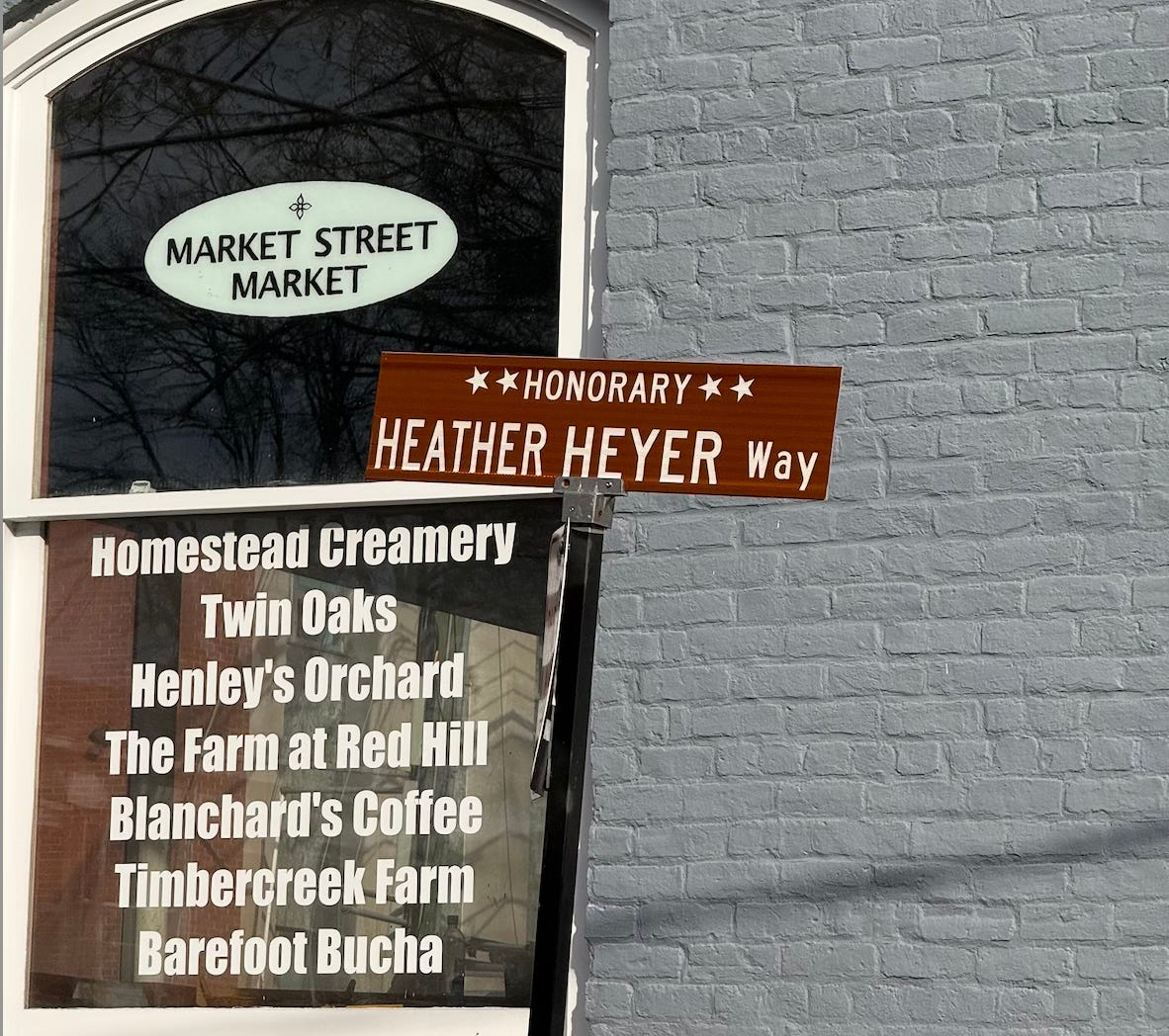
We passed the street now named for Heather Heyer, and I found myself slowing without quite deciding to. She was twenty-two years old when she was killed, standing with others who had gathered to oppose white supremacists who had come to the city to defend a monument to the Confederacy. A car was driven into a crowd of those protestors. Her life ended there, in the middle of a street that had become, for a moment, a line between what this country has been and what it insists on becoming.
Her name remains. Fixed to the street. Offered as a marker, a memory, a gesture toward acknowledgment.
And yet, as I stood there, I watched people move through that space with a kind of practiced ease. They paused, some of them, to take a photograph. They looked, briefly, as one does when encountering something one knows is important. And then they continued on, returning to the rhythm of their day, as though the meaning of that place could be absorbed in a glance.
It was not indifference I saw, but something more difficult to name. A distance that did not feel chosen so much as learned. As though we have been taught how long to linger in the presence of tragedy, and how quickly to move beyond it.
And I began to wonder what it means to name a place after a life if we are not prepared to give that life any of our time. Because not enough time has passed for what happened there to become history in any meaningful sense. Not enough time has passed for the forces that produced it to have disappeared. And yet we move as though it has. We move as though remembrance requires only recognition, not responsibility.
It is a peculiar thing, to stand in a place where someone stood and refused, where someone believed that their presence mattered enough to risk, and to feel how quickly the world resumes its motion. How efficiently it returns to its routines. How little interruption it allows.
And I understood then that this, too, is part of the structure. Not only the taking of our time, but the shaping of how we remember, how we respond, how long we are permitted to feel before we are expected to move on. Because to truly honor a life like hers would require more than acknowledgment. It would require time. It would require attention. It would require a willingness to remain present in a way that disrupts the very flow we have been taught to maintain.
But interruption is costly in a world that depends on our constant movement.
And so we keep moving.
We are told, very early, that to work is to live. That to build is to become. That if we give ourselves over to effort, discipline, and sacrifice, we will one day arrive at a place where life finally belongs to us. But the conditions under which we are asked to give ourselves away are not neutral. They are engineered. And the more faithfully you follow their instructions, the less of your life you seem to possess.
This is the gentle lie we inherit. Work hard. Build something. Earn your freedom. It sounds reasonable because it contains just enough truth to be believed. But if you measure your life not in achievements but in presence, the promise begins to collapse. The harder we work, the less time we seem to have. The more we achieve, the further we drift from the very things we were told we were working for. We spend our lives moving toward a life we never quite arrive at.
What is being extracted from us is not simply labor. It is time, yes, but also attention. It is the capacity to be present. It is the emotional and intellectual energy required to sustain connection. Our days are scheduled before we can inhabit them. Our attention is captured and redirected in ways we barely perceive. Our emotions are engaged, provoked, and exhausted by forces that profit from our engagement but remain indifferent to our well-being.
Work consumes the day. Screens consume the night. And exhaustion consumes what remains. The tragedy is not that we are tired. It is that we have built a world in which exhaustion is the price of participation, and called that freedom.
In such a world, we are not merely workers. We are resources. Our lives are not simply lived; they are harvested. Our time cultivated. Our attention managed. Our energy extracted in steady, predictable yields.
We like to imagine that we are free because no one is standing over us, but control has evolved. It no longer requires spectacle. It requires systems. The farmer does not chase the field. The farmer studies it, organizes it, optimizes its output. What we call modern life increasingly resembles this logic. Our habits are tracked. Our behaviors predicted. Our desires shaped in advance. We are not outside this system. We are inside it, and in many ways, we are it.
This system does not merely benefit from your absence. It requires it.
A system that requires you to spend the majority of your life away from the people you love is not a neutral system. It is a system that has already decided what your life is worth, and it has decided that you are worth more as output than as a human being.
There are those for whom your life is valuable only once it has been converted into output. For whom your exhaustion is not tragedy, but efficiency. For whom the distance between you and the people you love is not unfortunate, but useful. They do not need your presence. They require only your production. The field does not need to be loved. It needs to produce.
The cost of this arrangement is not abstract. It is visible in the lives we are living and, more painfully, in the lives we are not. It is in the birthdays missed and the calls postponed. It is in the conversations that never deepen because there is no time for depth. It is in the slow fading of relationships that once defined us. My godbrother’s gray hair did not arrive all at once. It arrived in the days that belonged to something else.
Families become occasions. Friendships become threads. Joy becomes something you schedule, if you can find the time.
And still, we participate. Not because we do not care, but because we have been taught to equate our worth with our output. To rest feels like failure. To pause feels like risk. We are told that to fall behind is to disappear, and so we run, often without asking who set the pace.
This is not a failure of character. It is a condition of living within a system that depends on our compliance. A system that does not require our hatred, only our belief.
We have mistaken being allowed to survive for being allowed to live.
What we are living through is not merely economic. It is spiritual. It asks what a life is for.
What is a life if it is spent preparing to live. What is success if it leaves you with no time to recognize it. What is the value of accomplishment if it costs you the presence of those who would have given it meaning.
These are not abstract questions. They are the questions that sat with me in Los Angeles, in the quiet space between recognition and refusal, as I looked at my godbrother and understood how little time we actually have.
And yet, to see the structure is to loosen its hold.
This does not require a grand rebellion. It asks for something more difficult. It asks for attention. For honesty. For the courage to reorder our lives, even in small ways, around what we claim to love.
To choose presence where we have been trained to choose productivity.
To insist on connection where we have been taught to accept distance.
To refuse, even imperfectly, to measure our lives only by what we produce.
Because we do not have as much time as we think. The number will always be smaller. The days will always be fewer. And no system, no matter how powerful, can return to you what it has already taken.
We have been taught to spend our lives as though they were currency, as though time were something to be exchanged, invested, optimized. But time is not money. It does not accumulate. It does not replenish. It does not forgive.
And one day, without announcement, you will run out of it.
Not in some distant, abstract way, but in the most ordinary moment. A conversation you did not have. A visit you postponed. A person you loved whom you assumed would still be there when you finally had the time.
And what will remain then is not what you built, or what you earned, or what you managed to produce. What will remain is what you were present for. What you held onto. Who you chose, and who you allowed yourself to be chosen by.
Everything else will reveal itself for what it always was.
Not your life.
Just what it cost you.
If my work has ever moved you, taught you, or made you feel seen, please consider preordering my novel Everything’s Not Lost or becoming a paid subscriber. I keep my writing free because I believe in access, but sustaining that vision takes support. Your contribution helps me keep creating with care and honesty.

This was so profound 🥹 needed this one today!
Thank you. As I said in my restack, you keep speaking my heart, brilliantly written.