

Something Good Left

Juneteenth marks the day when the news of emancipation finally reached enslaved Black people in Galveston, Texas, more than two years after freedom had already been declared. It is a day about freedom delayed, freedom denied, and the terrible distance between what this country says and what Black people are forced to survive.
That is why, for me, Juneteenth has never been only a celebration. It is also a question. What does freedom mean in a city where so many Black people are still living without shelter, without safety, without enough people willing to look them in the eye? What does remembrance require of us if it does not ask us to do something with our hands, our money, our time, and our care?
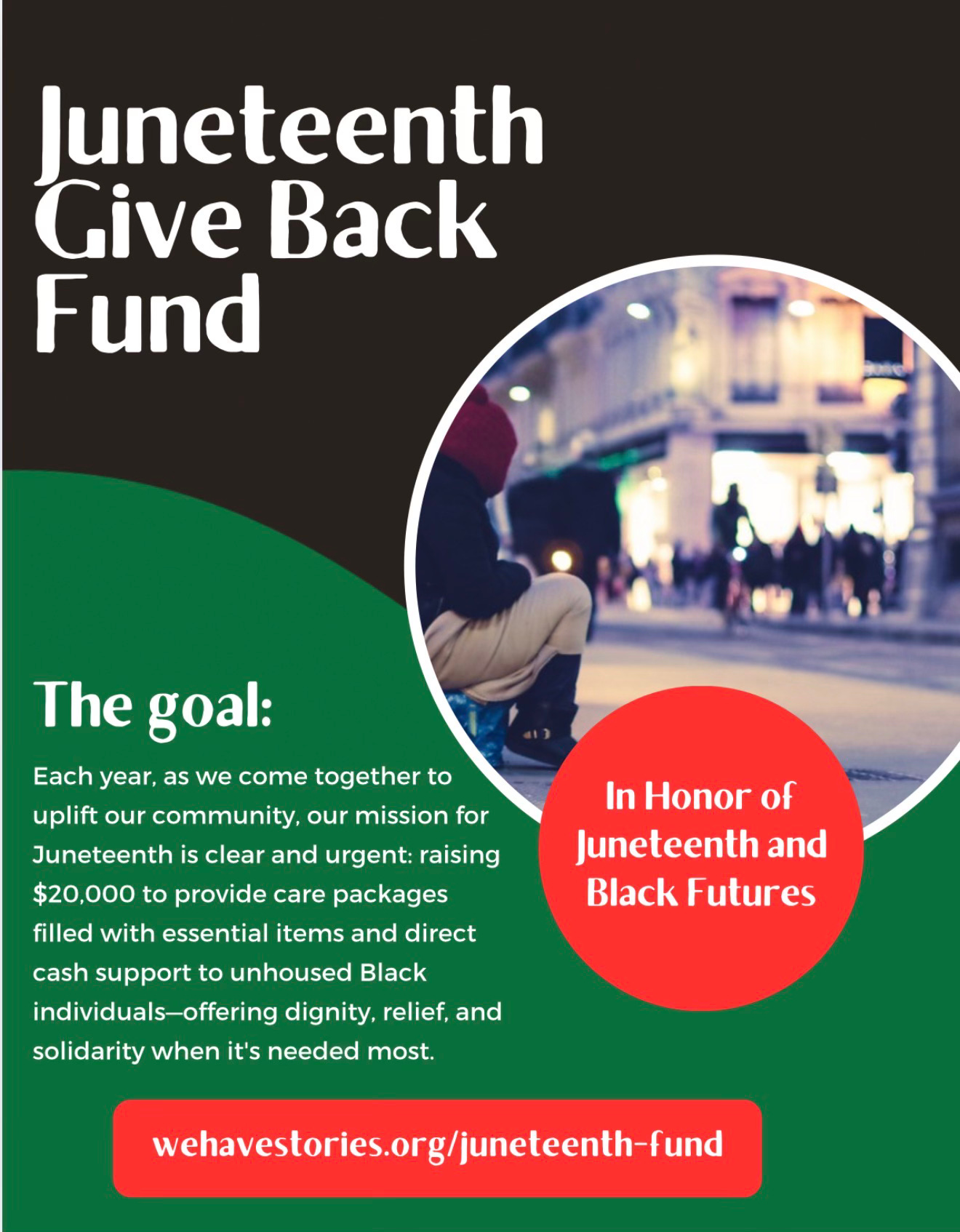
Which is why, for the eighth year, my foundation, We Have Stories, is raising money to support unhoused Black people in New York City. This year, we are trying to raise $20,000 so we can provide 100 people with care packages and direct cash support. These packages include socks, toiletries, snacks, water bottles, personal care items, and other essentials that many of us use without thinking, but that can mean a great deal to someone trying to survive without stable housing.
Right now, we are at $7,000 of our $20,000 goal, and I am asking every person reading this to donate $5.


I know that sounds like a small ask to some, but small asks become powerful when enough people decide that they are not too small to answer. Realistically, I also know how the internet works. Maybe 2% of the people who open this will actually give. I have talked about that before with my dear friend Robert Jones Jr., about how hard it is to get people to give. Especially when people often donate when they can connect the need to a face, to a name, to some immediate story that makes the suffering close enough to touch.
The difficult thing is that I do not take pictures of the people we serve (safety, anonymity, and respect). I take pictures of the care packages, the tables, the supplies, the bags being packed, the items being purchased, the people showing up to do the work. But I will not ask someone living through one of the hardest moments of their life to become evidence for someone else’s compassion. I do not want their pain turned into a poster. I do not want their circumstance reduced to proof.
But I do have stories.
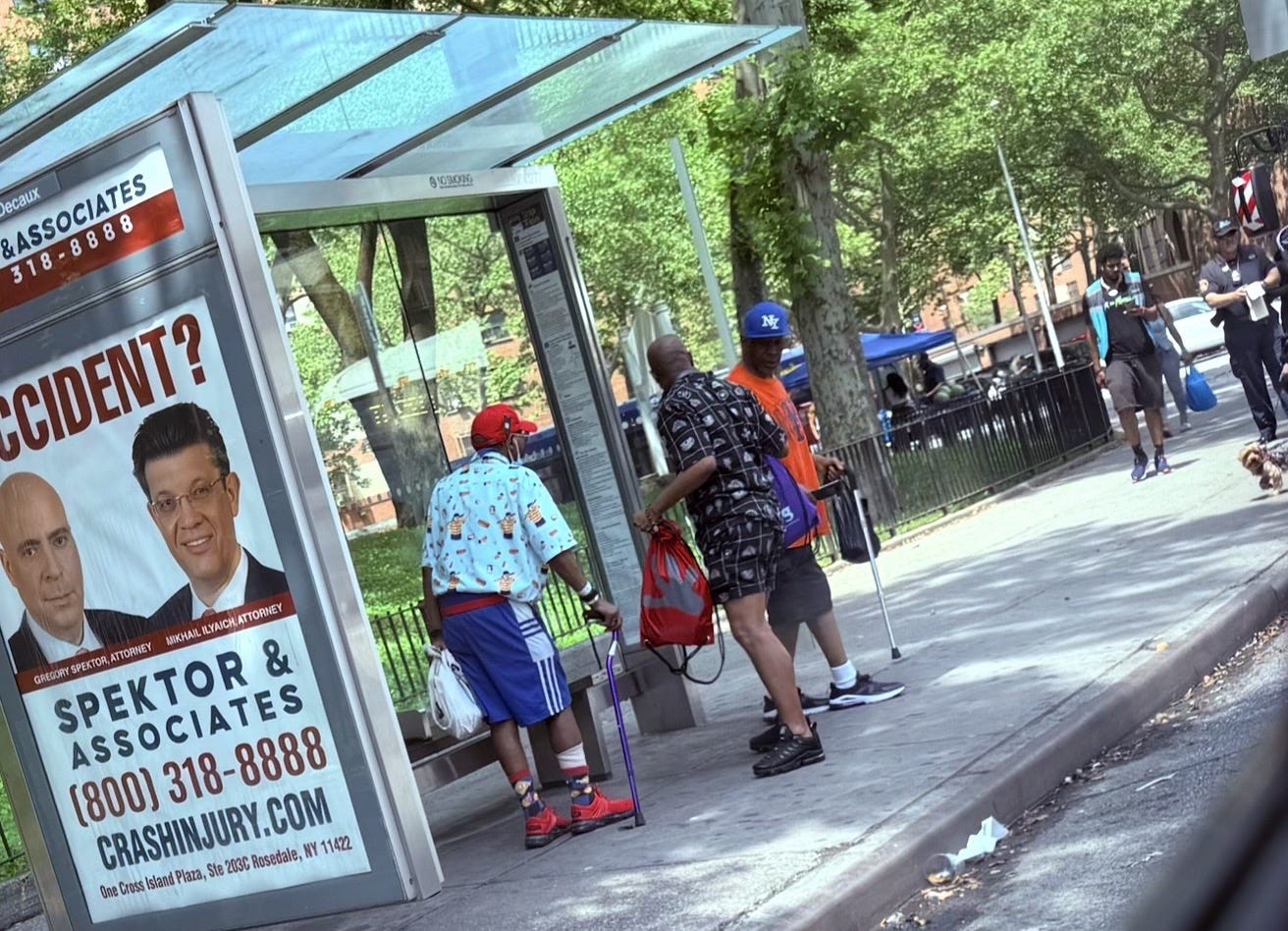
Last Juneteenth, we were in East Harlem, handing out care packages from my car. Robert was there with me, along with the illustrator and author Nikkolas Smith. They had gotten out to distribute packages while I waited nearby, watching people come up, receive what we had, and continue on through the day.
A few feet away, I noticed an unhoused Black woman in a wheelchair. She looked to be in her sixties. As we were giving packages to other people, she started rolling away from us.
At first I was confused. She had seen us. She was close enough to know we were handing out supplies. She could have asked. She could have waited. But instead, she turned herself away, and rolled toward the distance.
So I got out of the car, grabbed a care package, and brought it over to her.
I said, “Hey, wait a second.”
She looked up at me, startled. I asked why she hadn’t waited.
And she said, “I just figured I had missed something everyone else knew about already. There’s usually nothing good for me left. I don’t think anybody even sees me, so I was trying not to be disappointed I guess. It’s hard out here.”
I gave her the package, smiled as best I could, went back to the car, and started to cry.
Because what do you do with a statement like that? What do you do when someone tells you, plainly, without performance or self-pity, that life has taught them not to expect kindness? What do you do when a Black woman in a wheelchair, living outside in one of the richest cities on earth, has learned to protect herself by assuming that whatever good is being offered in front of her must not be meant for her?
You do the only thing you can do. You refuse to let that be the end of the story.
That is what this fundraiser is for. Yes, it is for socks and soap and snacks and water and cash, because people need material support, not just sentiment. But it is also for the moment when someone who has been trained by this world to expect nothing is reminded, even briefly, that they have not disappeared from the human family.
This year, we want to reach 100 unhoused Black New Yorkers. We are already at $7,000, which means we have made real progress, but we still have $13,000 to raise.
If you can donate $5, please do it today. If you can give more, give more. If you cannot give, send this to someone who can. I am not asking because $5 solves homelessness, or because one care package can undo the cruelty of a city that has allowed so many people to fall through its hands. I am asking because the fact that we cannot do everything has never absolved us from doing something.
https://wehavestories.org/juneteenth-fund
A shareable social media graphic to get others to donate:
I worked at 4 different nonprofit serving unhoused people over a period of 16 years in the Washington, DC and Montgomery County, MD. It was good work in not always the most well run nonprofits. There was never enough money, and always so much need. I was forever changed by my small contribution to trying to make how we served those in need truly effective.
I am deeply thankful for all the work you do, and the caring and wisdom you bring to seeing people for more than their circumstances.
I wish I could give more. My heart is for people who need to be treated as humans in their full dignity and value, and were I to have the funds, there would be no unhoused people, no people lacking care for their physical needs, no school children going hungry or unhoused, no one shivering in the cold because their family kicked them out for not fitting expectations.
I work at a food bank here on the West Coast, and we have a very strict rule about how we distribute our food: if you come into the food bank, we'll give you food. If you have special needs, we'll find something to fit it. If you're just drifting through town, we have "Go" bags with easy-to-eat meals that don't need cooking or preparation. If you show up, we'll welcome you, talk with you, laugh with you, cry with you, and make you understand that you're loved, you're wanted, and if you're hungry you just need to eat - no one needs a lecture or much advice beyond "take care of yourself, and come back any time you want to get some food."
We are lucky, I guess, because we have a generous community here that overloads us with donations. Often it's the goods and produce that we distribute (some fresh from their farms), and other times we use the monetary donations to buy what we lack. For the rest of the summer, for example, we're creating special food packs for families with school children because when school's out, many families don't have enough to feed their kids well. And we have a special period in our food bank's operating hours just for our folks who are in their golden years - they can come in and "shop" with fewer interruptions and a special set of food just for people living on their own or who don't want to cook - or can't cook.
Every week we get one or two groups of people who just pass through. Sometimes it's teenagers who have been booted from their homes. Sometimes it's single people who just are making do. We make sure they're fed, and we work with our local temporary housing authority to direct them to a place for short-term shelter if they need it. We'll probably never see them again after they leave, but we make sure we get to know them, make sure they get the food they can use, and make sure that they leave knowing that we saw them.
We can't help everyone, of course, with everything. Some just can't manage their lives, and lack of food is a symptom of a lack of social self-regulation. Some can't get housing because their lives are chaotic and their humanity has been bypassed by an economy that says you're worth something only if you have a skill someone can make money from. People get left behind by the increasing competition to "make money," and those people don't have the skills or ability to work anymore.
But they are, first of all, people. And people have inherent dignity and worth. We feed them because people need food and we have the food.
We're not solving the problem of lack of housing, yes. I'm on the city Planning Commission, and it's one of our highest priorities to find housing for the working poor and for those who simply cannot work and yet need housing. It's a difficult nut to crack, and we haven't cracked it yet. Still, we do what we can with our limited resources, and we use those resources the best we can.
I guess that's the best anyone can do: when there are resources, and when there is need, we do what we can to make sure those resources reach the people who need them, whether it's food or housing or health care or safety.
I appreciate, then, what you do from your own generosity and care, and I appreciate how you work to organize help using people working along with you to provide food and care to the people you meet in your neighborhoods.
We can't all do everything. But each of us can do something. And I am grateful that you are doing what you can, and that you are helping others understand the importance of loving our neighbors as ourselves.